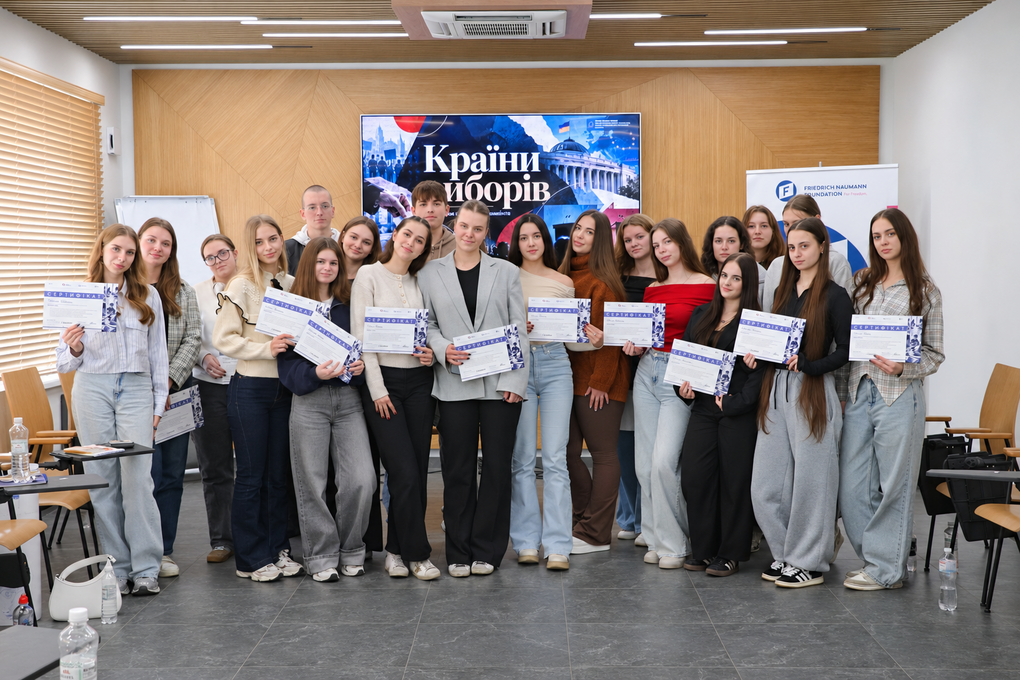
Election Countries in Uzhhorod: Noveria wins the student simulation
On 28–29 October 2026, journalism students in Uzhhorod took part in ‘Election Countries’, a training programme organised by the Academy of Ukrainian Press with the support of the Friedrich Naumann Foundation for Freedom’s representative office.
Over two days, participants discussed elections, political communication and how people actually form their political preferences. They then experienced the process themselves, from creating a country to running a campaign, debating and voting.
One session focused on political campaigning techniques. In the ‘Museum of Political Technologies’, participants examined framing, emotional triggers, labelling, microtargeting, astroturfing and algorithmic amplification. Concrete examples showed how the same event can look entirely different depending on its framing, which figure appears in the headline and what is left out.
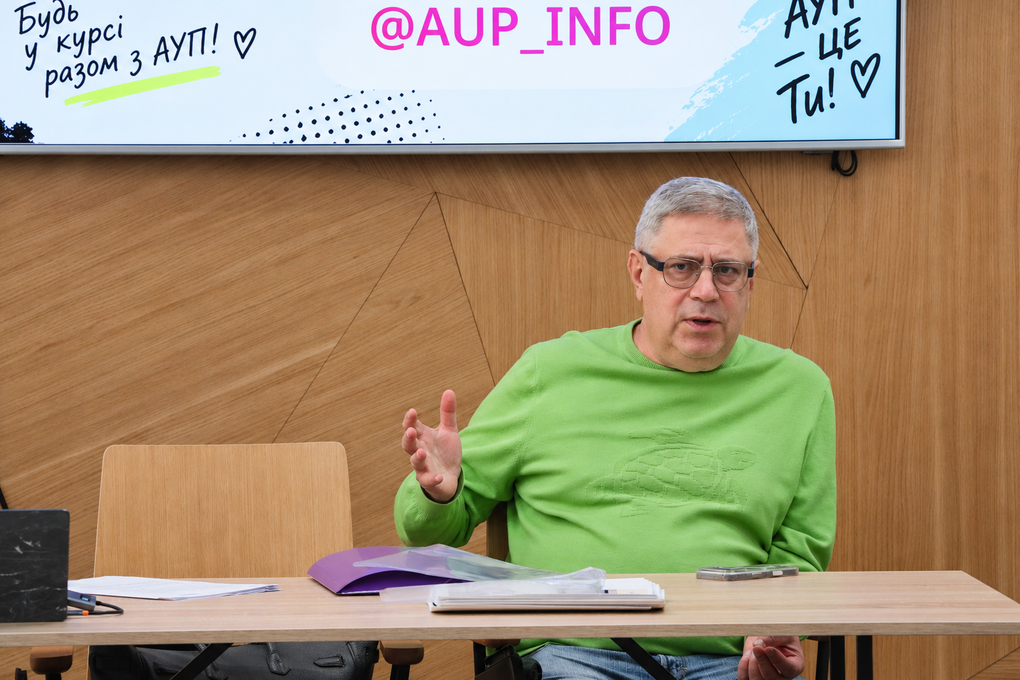
‘Journalists must look beneath the surface of a political message. They need to understand who created it, for whom, to what end and what has been left outside the picture presented to us. Critical thinking begins when we stop taking information in automatically,’ said Professor Valeriy Ivanov, President of the Academy of Ukrainian Press.
The practical work included speechwriting and profiling. Students prepared short speeches for different political situations, developed arguments, analysed communication strategies and learnt to distinguish observations from their own assumptions.
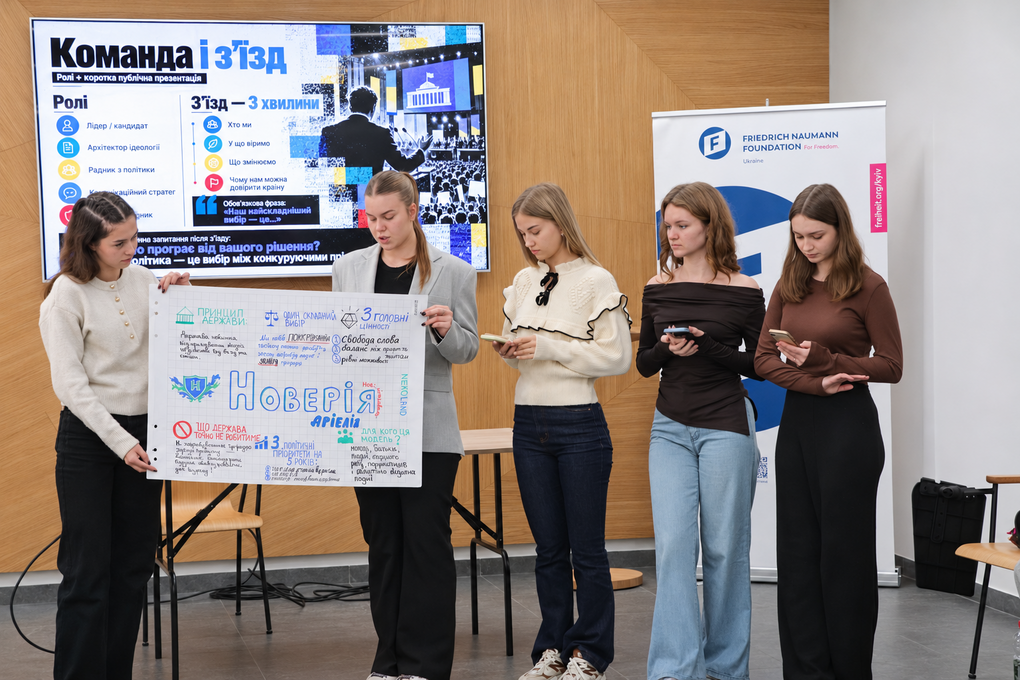
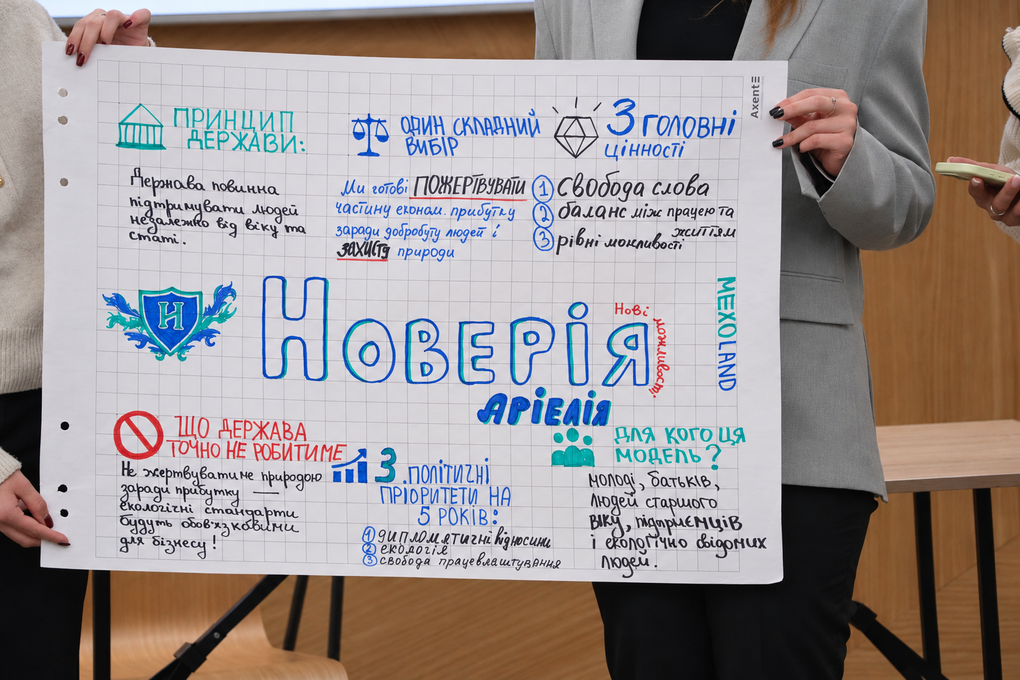
The election simulation began on the second day. Four teams created their own states: Eudemonia, Danalix, Noveria and Amera. They defined each country’s values, political priorities and development model, allocated team roles and prepared election campaigns.
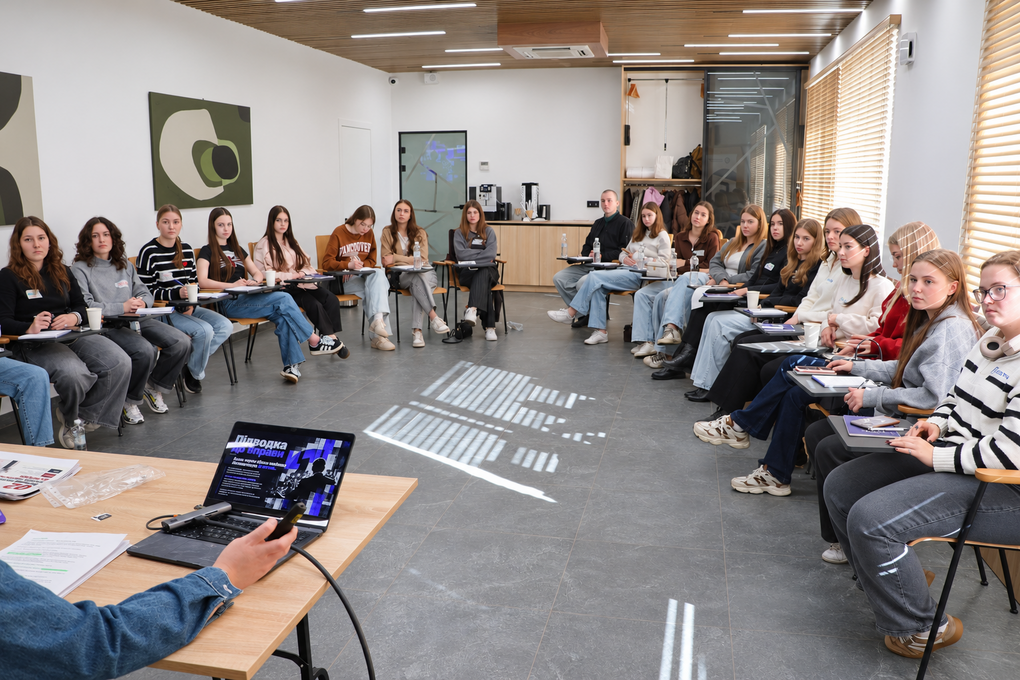
The countries presented their programmes at party conferences before taking part in televised debates. An attractive presentation was no longer enough. Teams had to answer difficult questions, explain their decisions, respond to crises and show how their policies would work in practice.
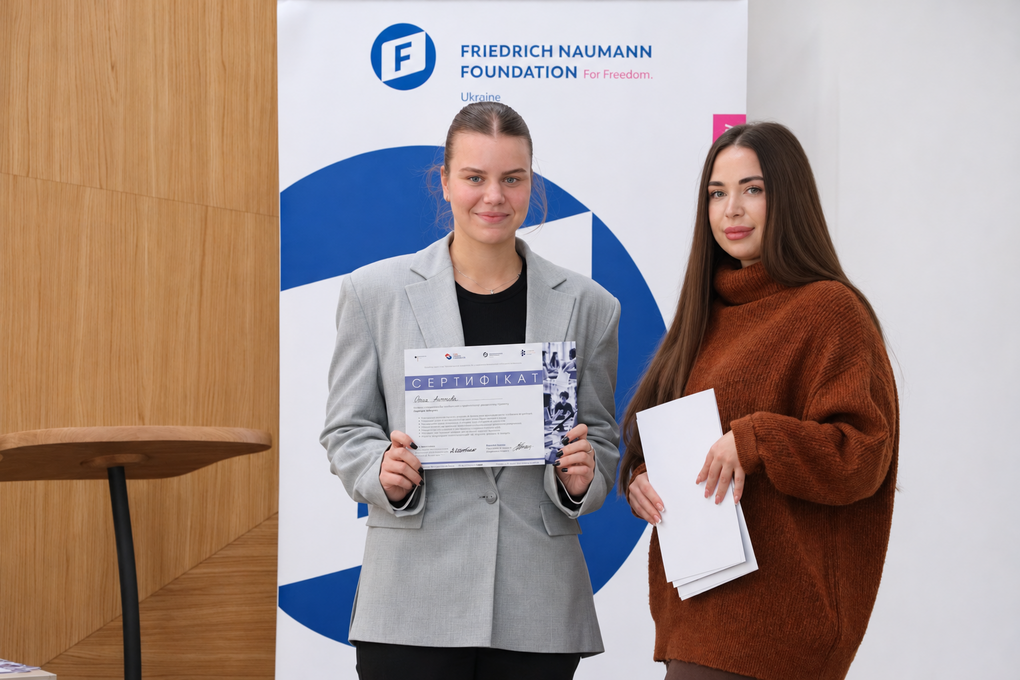
The training ended with a vote. Participants chose the country in which they would most like to live, but could not vote for their own team. Noveria won.
‘We want students to leave with practical experience as well as new knowledge. When you develop a political programme yourself, present it, respond to criticism and see voters’ reactions, you gain a much better understanding of the complexity of political processes — and of the responsibility for your words and decisions,’ said Yuliia Kulyk, Project Coordinator at the Academy of Ukrainian Press.
Uzhhorod was another stop in the ‘Election Countries’ series, which explores democracy, political communication and elections through practical work as well as theory.
Supported by the Federal Republic of Germany.
Gefördert durch die Bundesrepublik Deutschland.
Translation note: This is a literary translation into British English, produced and proofread using a language model. Read the Ukrainian original.