AUP in Ukraine2EU: how CONNECT-EU helps communities understand Ukraine’s path to the EU
The Academy of Ukrainian Press implements CONNECT-EU with Ukraine2EU support. It is one of twenty projects selected through a civil society funding call to help Ukraine prepare for EU membership. AUP’s work begins with local audiences’ needs: journalists learn to explain reforms, produce community reporting and involve experts in discussing European integration’s opportunities and challenges.
CONNECT-EU (Communities, News, Networks for European Union) brings together journalists, educators, experts and community representatives. It helps distribute verified EU information, recognise manipulation and explain how European changes affect daily life. An important aim is a network that continues beyond the project. Read the official CONNECT-EU description on Ukraine2EU’s website.
CONNECT-EU MEDIA LAB: two courses for regional journalists
AUP has delivered two two-day ‘CONNECT-EU MEDIA LAB: European Integration Without Myths’ courses, on 20–21 September and 8–9 October 2026. Regional journalists examined Ukraine’s accession and sought stories relevant to their communities.
Participants used primary sources, checked reform claims and assessed experts’ competence. The editorial laboratory defined each proposed article’s main question, audience, required data and format. This preparation helps explain complex subjects through specific local examples.
Read AUP’s reports:
- The first CONNECT-EU MEDIA LAB: explaining European integration clearly and practically.
- The second CONNECT-EU MEDIA LAB: EU integration and community reforms.
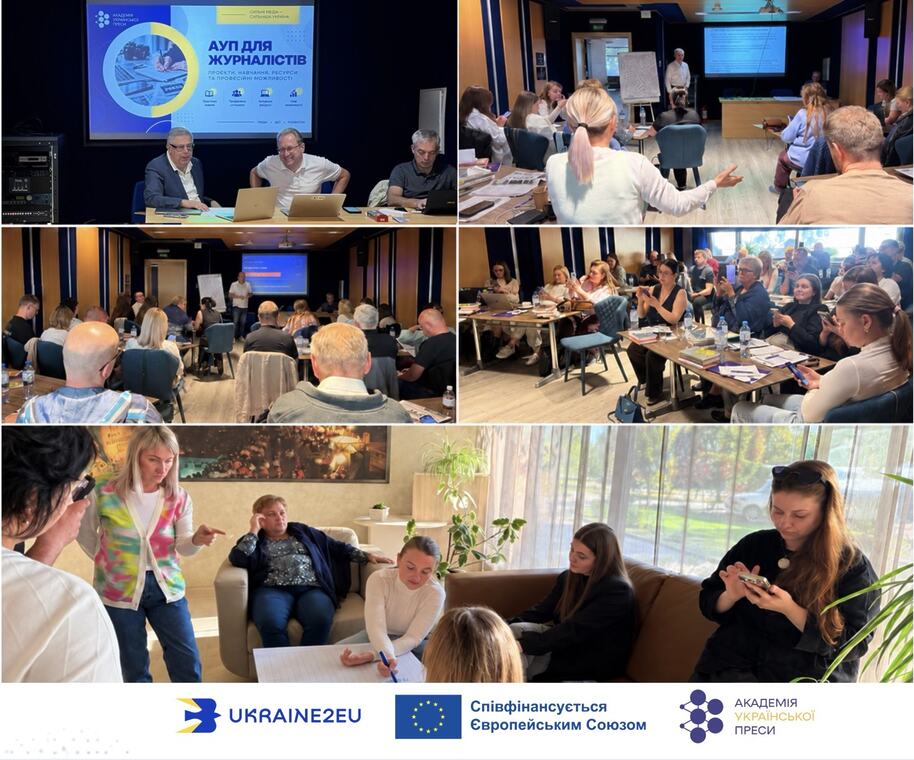
CONNECT-EU MEDIA LAB, 8–9 October 2026. Photograph from AUP’s published report on the second course.
From training to article series for local audiences
Learning continues in newsrooms. AUP helps journalists develop ideas and article series about European integration that respond to local needs: employment, enterprise, local government, community development and changes requiring preparation.
As AUP reported after the second course, September participants had already published more than seven EU-related articles. October participants reviewed and discussed them.
One local example is Kremenchutska Hazeta’s reporting on Kremenchuk residents’ first year in Germany and Poland, covering employment, housing, support and everyday experiences.
AUP created the ‘CONNECT-EU | People. Media. Communities’ media network for further cooperation. Journalists consult experts, receive advice and mentoring and develop publications. The exchange helps newsrooms return to the subject systematically.
Expert comments on fears, myths and real risks
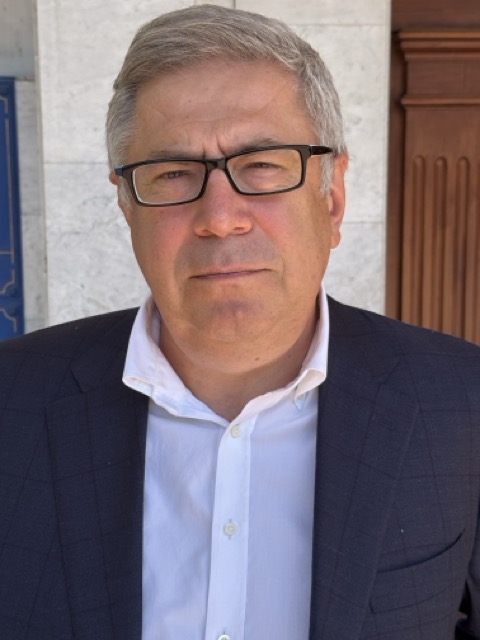
Professor Valeriy Ivanov, President of AUP and Doctor of Philology.
Valeriy Ivanov stresses:
‘At training like this, journalists learn to check claims, ask critical questions and explain what reforms actually involve.
‘Local media need the habit of checking primary sources and consulting competent experts for comments and explanations. This helps explain accession requirements accurately, examine individual provisions and counter myths and misunderstandings. Particular attention is needed for details misinterpreted or used for speculation: journalists must establish precisely what a requirement entails, whom it affects and the conditions for fulfilling it.’
What will change for small businesses? How can they prepare for European standards? What tasks face communities? Answers require verified sources and expert explanations. Some fears rest on stereotypes; others concern real costs and difficult decisions.
One example was Anastasiia Kharina’s Volnovakha.City article featuring CONNECT-EU trainer and local government expert Anatolii Shalaiev. AUP used it to prepare ‘Ukraine’s EU Accession: Separating Common Myths from Real Challenges’.
It examines sovereignty, land, enterprise, prices, the hryvnia and community capacity. Expert explanations separate unfounded fears from practical tasks: adapting to standards requires resources, advice and trained specialists. Journalists need to present opportunities and difficulties, checking specific claims and avoiding unsupported promises.
One of twenty Ukraine2EU projects: more to follow
According to Ukraine2EU’s official information, the call supported twenty projects. Their work includes expert assistance with negotiations and reforms, legislative preparation, implementation, independent monitoring and public awareness.
CONNECT-EU focuses on accessible information and regional cooperation. Other initiatives have their own tasks and tools. In future publications, AUP will introduce the other nineteen projects, their teams, aims, activities and results, showing how civil society contributes to Ukraine’s membership preparations.
Where to find CONNECT-EU resources
News, learning events and journalistic publications are collected on AUP’s main CONNECT-EU page, which is updated with project material.
About the organisers
AUP is one of Ukraine’s leading civil society organisations. For more than two decades, it has worked in journalism, media literacy and civic education, delivering large-scale projects across the country.
Ukraine2EU is a flagship European Union initiative supporting Ukraine’s preparations for accession and future EU membership.
This post was prepared with financial support from the Ukraine2EU Programme. The views and opinions expressed are the sole responsibility of the Academy of Ukrainian Press and do not necessarily reflect the position of the Ukraine2EU Programme or the European Union.
Translation note: This is a literary translation into British English, produced and proofread using a language model. Read the Ukrainian original.