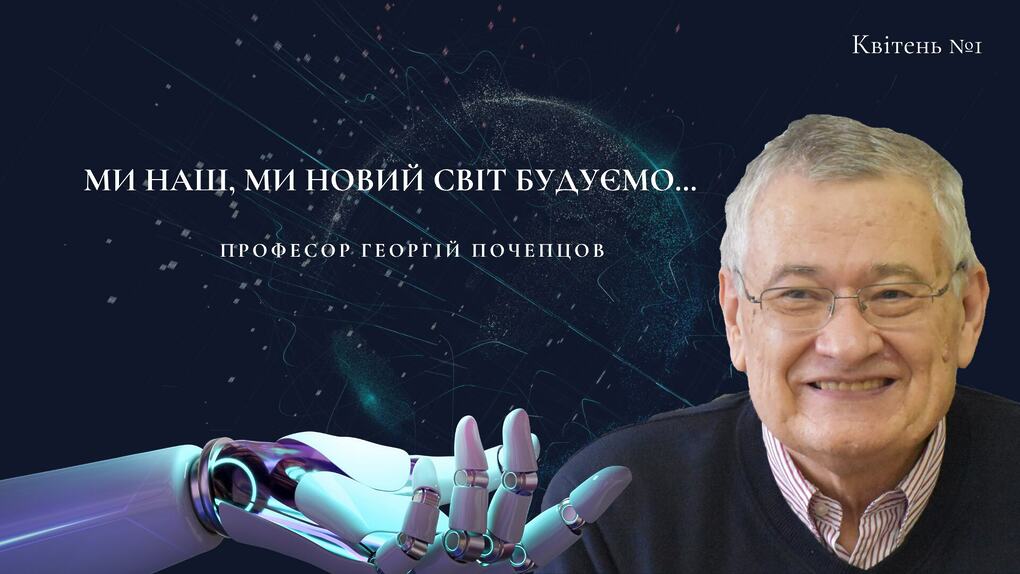
We Are Building a New World of Our Own…
For a long time, the USSR looked towards the future, putting off the promised outcome until tomorrow or even the day after. This made it possible to explain existing problems as “temporary difficulties”. Yet states can endure for a long time, while a human life is finite… Those difficulties often proved far from temporary, accompanying several generations throughout their lives. Much of that life unfolded within a system of rewards and restrictions characteristic of hierarchical government.
Periods of mass repression left a lasting mark on collective memory. These include 1937 and the campaigns of the late 1940s against so-called “kowtowing to the West”. At different times, attempts were made to remove texts deemed undesirable by the official view of how mass consciousness should be shaped.
Ideas about distancing oneself from what was “foreign” had, however, emerged earlier, including among the Russian Futurists. Their 1912 manifesto, A Slap in the Face of Public Taste, called for a radical rethinking of classical culture.
Fears about outside ideas influencing citizens’ minds persist in various forms today, in the information society. States have traditionally relied more on control and regulation than on persuasion. Such mechanisms often prove effective even when they require little deep reflection.
The Soviet period brought a suspicion of the West that had not been characteristic of the pre-revolutionary era. Contemporary researchers note that, in the information society, competition is increasingly moving into the realm of meanings and narratives.
The USSR systematically resisted the spread of “undesirable” ideas and those who carried them. This began in the first years of Soviet rule, when some members of the intelligentsia were forced to leave the country. Expulsion lists included doctors, lecturers, economists, writers, lawyers and students.
History shows that governments have responded differently to criticism at different times: sometimes restricting it, sometimes allowing it to a limited extent. Maintaining a balance between openness and control is nevertheless difficult for any political system.
Intellectual circles often draw on earlier experience and knowledge, which can create tensions during periods of radical change. Some early twentieth-century thinkers, well versed in the international intellectual context, offered critical assessments of the new reality.
The state always has a wide range of ways to influence those who think differently. Meanwhile, people inhabit several spaces at once: physical, informational and virtual. Where fears once centred largely on physical threats, many are now shaped by the information environment.
We often try to build the present using models inherited from the past. In these models, the centre of power plays an important role: a figure in which authority is concentrated. Moving towards other forms of interaction is difficult because the past, with its hierarchies, continues to influence the present.
Russian political discourse sometimes views Ukraine through the lens of past dependencies, a view that does not reflect today’s reality. Creating new social models is always difficult, especially when it involves transforming existing structures.
To a considerable extent, we are people of the past, because that is where our ideas were formed. Power has traditionally rested on principles of subordination historically linked to survival. Yet not every rule from the past passes into the future. Revolutions often change these approaches, although hierarchies survive in new forms.
Even in different political systems, democratic or quasi-democratic, hierarchies and rules of subordination retain their role. Once a system is established, the person at the top matters less than the structure itself.
Modern societies have experienced several waves of transformation. Each time, however, subordination to a new system has remained central. History, too, has repeatedly been reinterpreted to suit new political circumstances.
After the Second World War, the USSR launched a campaign against cosmopolitanism, accusing some intellectuals of excessive attachment to the West. In the Soviet understanding, ideology functioned as a system that could not be questioned.
Today, certain practices associated with controlling the information space can be seen returning. In such circumstances, the right to an individual opinion sometimes gives way to demands for collective approval. This affects cultural life, including art and public communication.
Ideology is always connected to power. What is seen as a threat to power may be treated as a threat to society as a whole. When political circumstances change, so do perceptions of “enemies” and “allies”.
Attitudes towards what is “foreign” have often been wary. Practical needs have sometimes changed those attitudes, however, as happened in science during the development of nuclear technologies.
The USSR remained a highly politicised state that devoted considerable attention to ideological influence. This created a persistent sense of tension in both the physical and the information worlds.
The opposition between “us” and “them” played an important role in that system, strengthening its capacity to mobilise people. Political systems generally favour clear divisions, leaving less room for complex, multidimensional judgements.
Control over public expression was, and remains, one of the principal instruments of government. In such circumstances, free speech can be restricted, affecting the development of public discourse.
Society nevertheless always needs space for emotion and discussion. At different times, culture, sport and other forms of social activity have served these purposes.
Science and culture respond differently to pressure. The natural sciences often enjoy greater autonomy, while the humanities are more dependent on ideological frameworks.
The world remains complex and multidimensional. Public life, however, is often simplified to make government more effective. This creates a gap between reality and simplified interpretations of it.
Any imbalance in our perception of reality can lead to distortions: we start seeing things that are not there and overlooking things that matter. This is particularly apparent in political communication.
Confrontation between different systems, including in the information space, demands considerable resources and effort. Yet humanity spends a substantial share of those resources on internal conflicts.
We live through periods of change in which conflict and peace alternate. In each of these periods, the desire for victory persists, in both the physical and the informational dimensions.
Translation note: This is a literary translation into British English, produced and proofread using a language model. Read the Ukrainian original.