Information Antidote: a FreeMind Ukraine exercise for children and adults
Information Antidote is a practical FreeMind Ukraine exercise for developing critical thinking and media literacy. It helps participants spot manipulation, understand how it affects people, find reliable factual ground and decide on a responsible response. It can be used with teenagers, young people and adults, adapting the examples’ complexity and the discussion’s language to the audience’s age.
How the exercise works
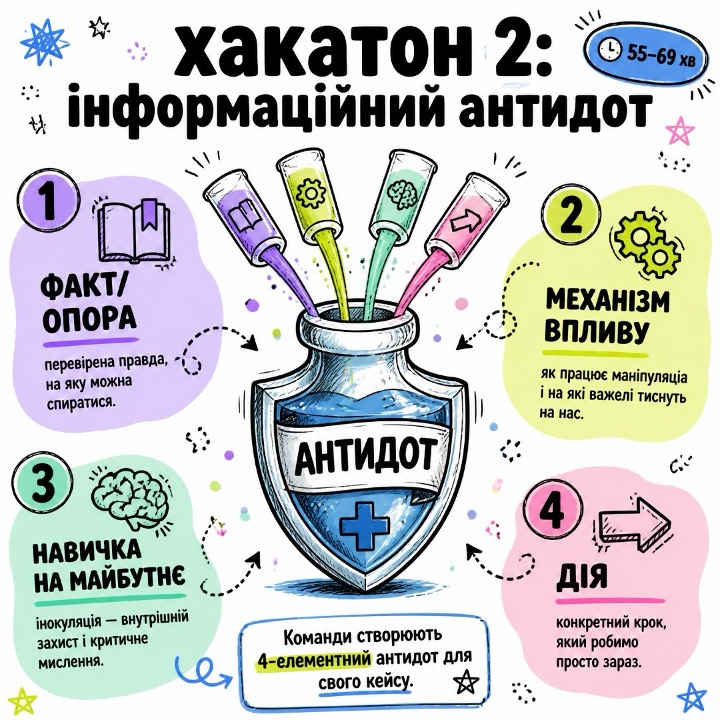
Teams examine messages that exploit emotions or audience vulnerabilities, use clickbait, draw distorted conclusions or omit context. Each team creates a four-part ‘antidote’ to its chosen case:
- Fact or foundation: verified information to rely on.
- Mechanism of influence: an explanation of how the manipulation works and which emotions or vulnerabilities it exploits.
- A skill for the future: a rule or technique for recognising similar influence next time.
- Action: an immediate practical step, such as checking a source, finding the original publication, withholding a dubious post or explaining the manipulation to someone else.
What Information Antidote teaches
- Separating facts from judgements, assumptions and emotional pressure.
- Recognising fear, outrage, exhaustion and betrayed trust as levers of influence.
- Identifying a message’s purpose, audience and intended behaviour.
- Explaining manipulation in plain language.
- Choosing a response and acting responsibly in the information environment.
- Working as a team and giving reasons for decisions.
Running the exercise
Suggested duration: 55–69 minutes. A shorter session can use one case and finish in 35–45 minutes.
- Form teams, ideally of 4–6 people. Each receives one of the suggested cases or an example the trainer has selected for that audience.
- Take an ‘X-ray of influence’. Identify the main claim, emotion, audience vulnerability, mechanism of manipulation and action the message encourages.
- Check the factual foundation. What facts are missing? Who is the original source? Can other reliable sources corroborate the image, figures, quotation or account of an event?
- Choose a response. Teams can use fact-checking, prebunking or ‘inoculation’, explanation of the mechanism, strategic communication, or deliberate restraint in circulating dubious content.
- Assign roles. The fact-checker prepares the rebuttal’s main points; the analyst explains the mechanism; the audience advocate checks whether the response is understandable; the communication strategist develops a useful message; the prebunking trainer explains how to recognise the technique in future.
- Create and present the antidote. Every response must contain all four elements: fact, mechanism, skill and action. Other teams ask clarifying questions afterwards.
- Reflect. Discuss what was hardest, which role participants could use in their own information habits, and which response they will try during the coming week.
Adapting the session for children and adults
For children and teenagers, use safe, understandable examples without traumatic details. Explain terminology simply and emphasise ‘stop – ask – check – only then share’. Teams can create a short checklist, poster or message for their peers.
Adults can work with current community cases, compare several sources, analyse statistics and visual evidence, and model a response from a newsroom, educational institution or civil society organisation. Avoid reducing the session to finding the ‘right answer’: its value lies in the reasoning behind verification and the conscious choice of an action.
The exercise slides
The full sequence of resources appears below. Display them on screen or use them as cards for teamwork.
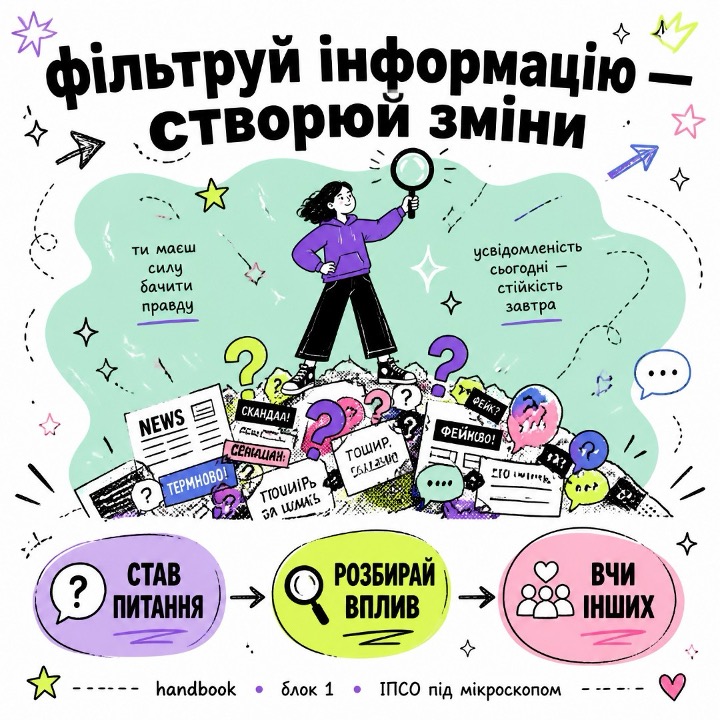
Slide 1. Filter Information – Create Change.
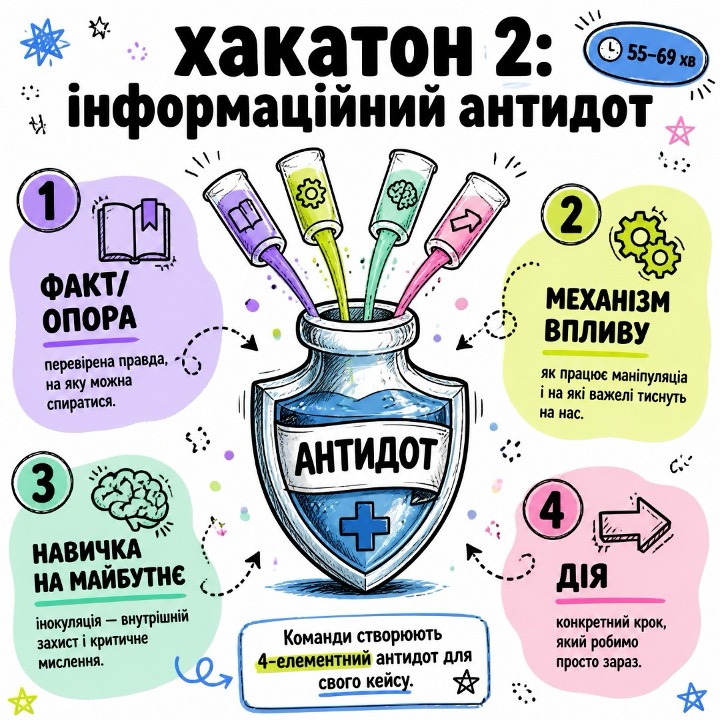
Slide 2. Information Antidote.
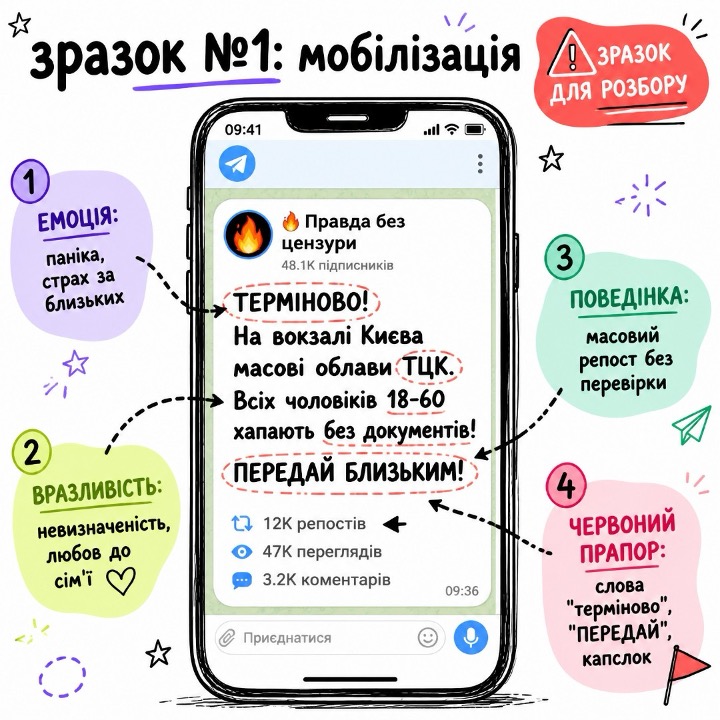
Slide 3. The ‘Mobilisation’ example.
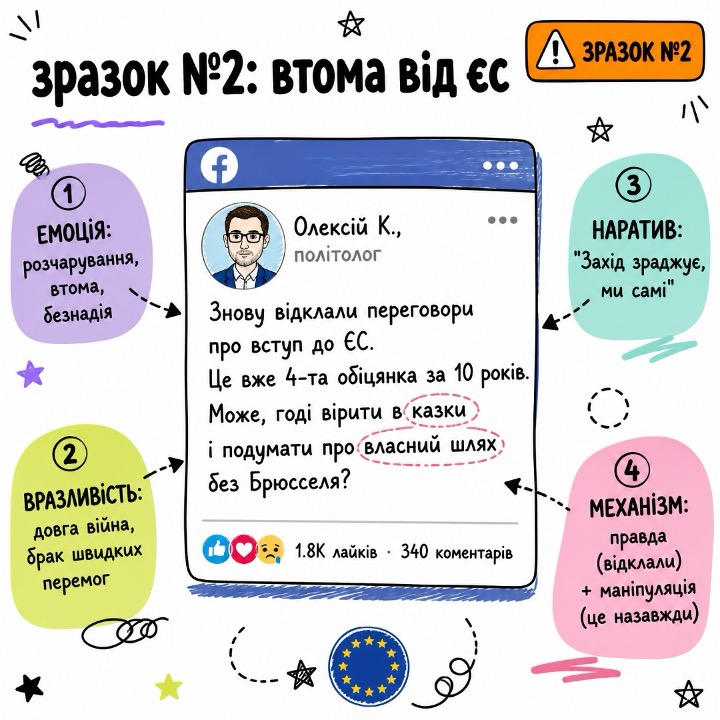
Slide 4. The ‘EU Fatigue’ example.
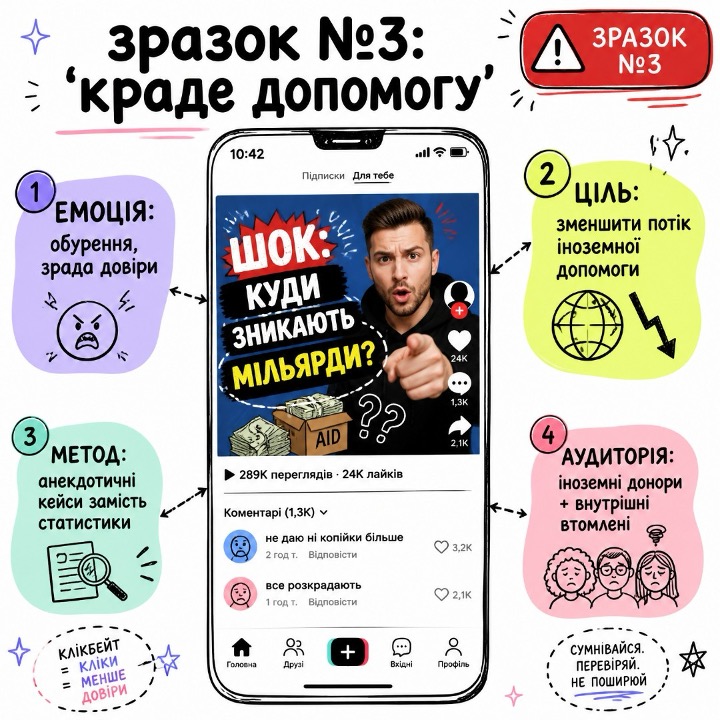
Slide 5. The ‘Stealing Aid’ example.
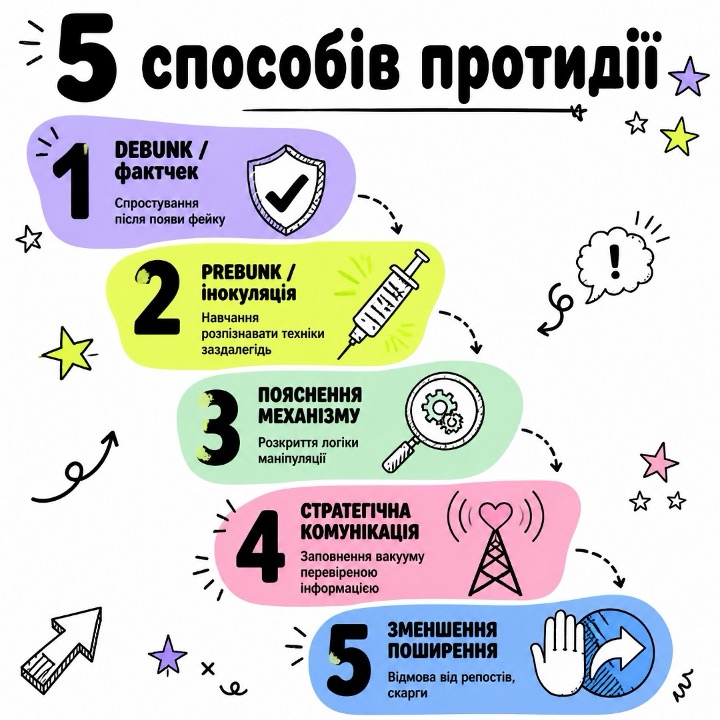
Slide 6. Five ways to respond.
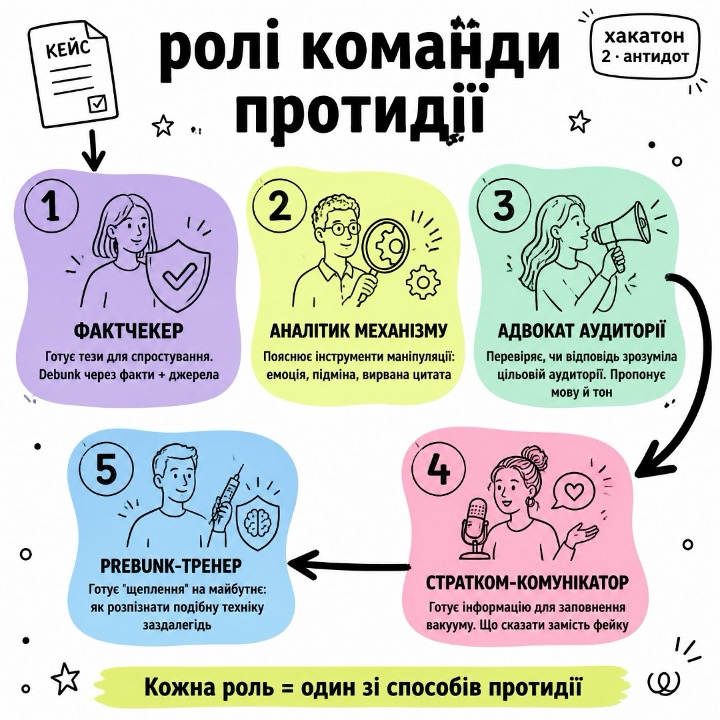
Slide 7. Roles in the response team.
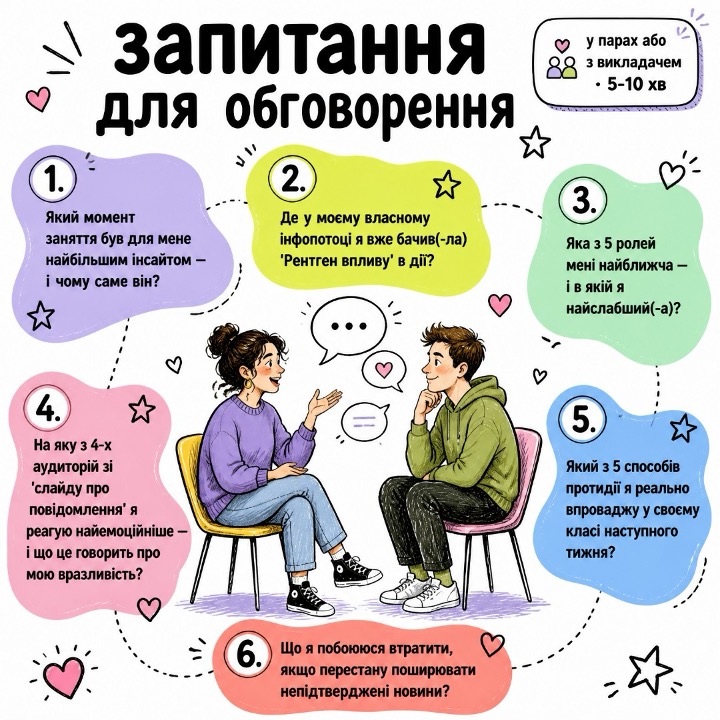
Slide 8. Questions for discussion.
FreeMind Ukraine: learning that reaches further
Read about the initiative and find news and practical resources on the main FreeMind Ukraine project page.
If you understand how fragile trust in the information space is during wartime, and want to learn to protect it for yourself and your community, join FreeMind Ukraine.
Complete the registration form.
Trainers and experts
- Tetiana Ivanova, media expert, Doctor of Pedagogical Sciences, Professor and Head of the Department of Social Communications at Mariupol State University.
- Andrii Yurychko, media trainer, Candidate of Philological Sciences and lecturer at the Institute of Journalism, Taras Shevchenko National University of Kyiv.
AUP’s implementation partner is the Centre for Media and Information Literacy (CeMIL) at the Institute for Media and Communication Studies, Freie Universität Berlin, Germany.
CeMIL is part of the university’s Institute for Media and Communication Studies and brings up-to-date media literacy expertise. It has extensive experience of training and research with journalists and communication scholars from Eastern European countries and has successfully managed projects in previous rounds of Eastern Partnership programmes.
Translation note: This is a literary translation into British English, produced and proofread using a language model. Read the Ukrainian original.